Arthur Jones, Nautilus and the birth of high-intensity training
In 1970 Arthur Jones began selling a strength machine built around a shaped cam. His machines changed how gyms were equipped, and his ideas about…
GYMVAULT Journal
Long-form writing on training, the history of high-intensity methods, machine design, and how to buy and run gym equipment well. We separate what research shows from what famous lifters believed, and we cite our sources.
In 1970 Arthur Jones began selling a strength machine built around a shaped cam. His machines changed how gyms were equipped, and his ideas about effort still shape how people train. Here is what he got right, what research has since revised, and why it matters when you choose equipment today.
Read the articleIn 1970 Arthur Jones began selling a strength machine built around a shaped cam. His machines changed how gyms were equipped, and his ideas about…
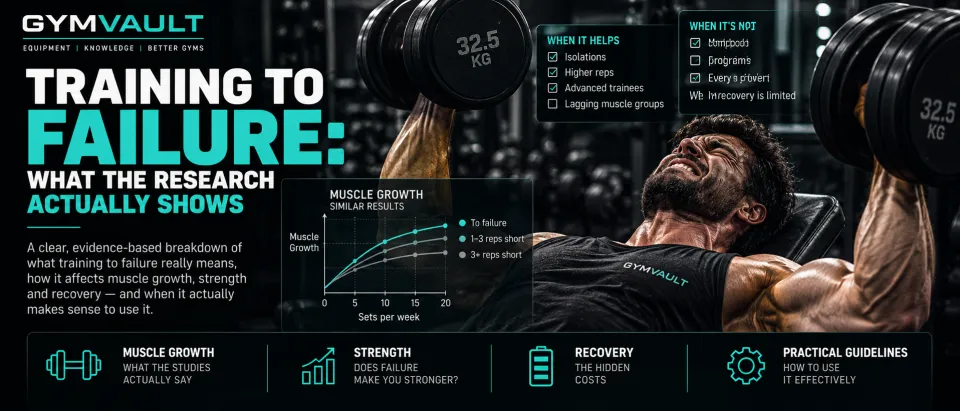
Should every set end with a repetition you cannot finish? Meta-analyses now give a fairly clear answer. Effort matters a great deal, true failure…
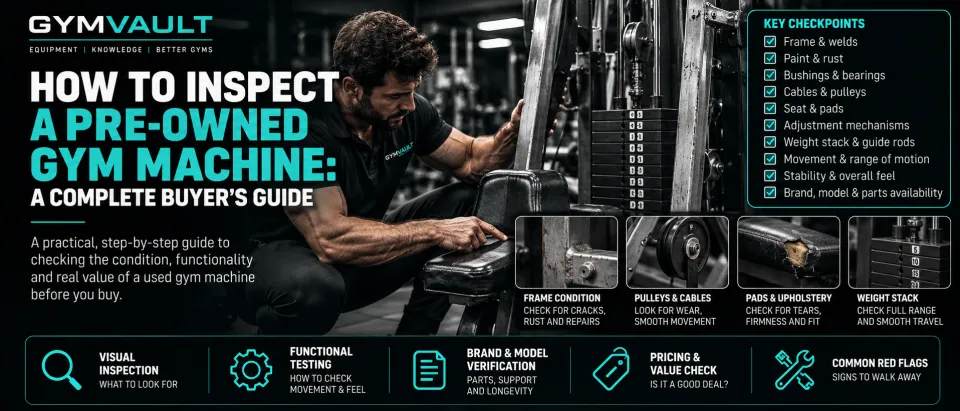
A commercial machine can look tired and be mechanically sound, or look immaculate and hide a frayed cable. This is the inspection approach we use…

Six consecutive Mr. Olympia titles were won on a programme many lifters would call too short. Here is what Dorian Yates actually did, why one…

Muscles grow when they are made to work hard against resistance, and they keep growing when that demand keeps rising. Here is what the research says…

How many sets, how many sessions, and how much rest? The research on training dose has matured a great deal in the past decade. Here is what it…

Two machines can carry the same number on the weight stack and feel completely different. The reason is leverage. Here is how cables, cams, levers…
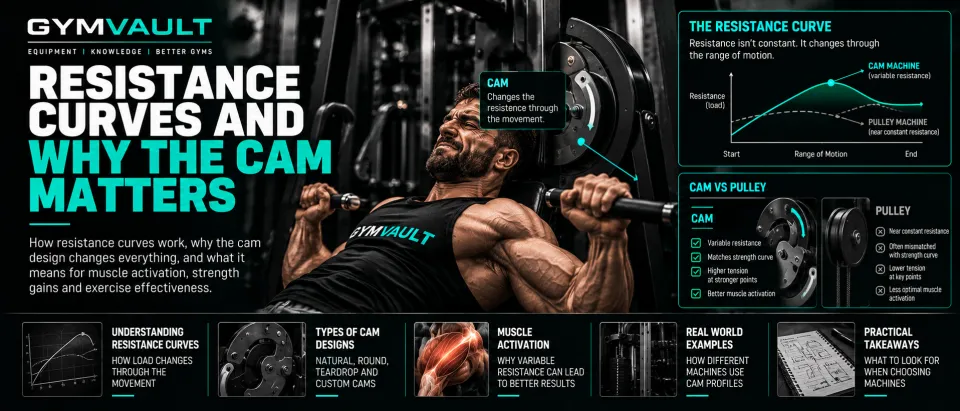
Every exercise is harder at some points than others, and so is every muscle. When the two patterns do not match, part of the movement does most of…
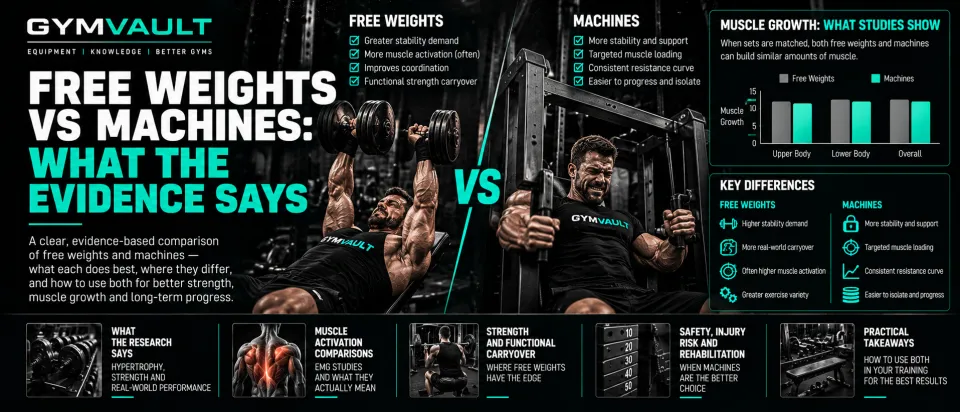
The argument is older than most gyms. Barbell purists call machines a crutch, and machine enthusiasts call free weights an unnecessary risk…

The words “commercial grade” appear on everything from light home benches to heavy plate-loaded leg presses. They have a real meaning, rooted in how…

“Refurbished” is one of the most overused words in the equipment trade. It can mean a full strip-down and rebuild, or a wipe with a cloth. Here is…

A good home gym is not a showroom. It is a small set of well-chosen equipment that lets you train every major muscle hard, safely and often. Here is…
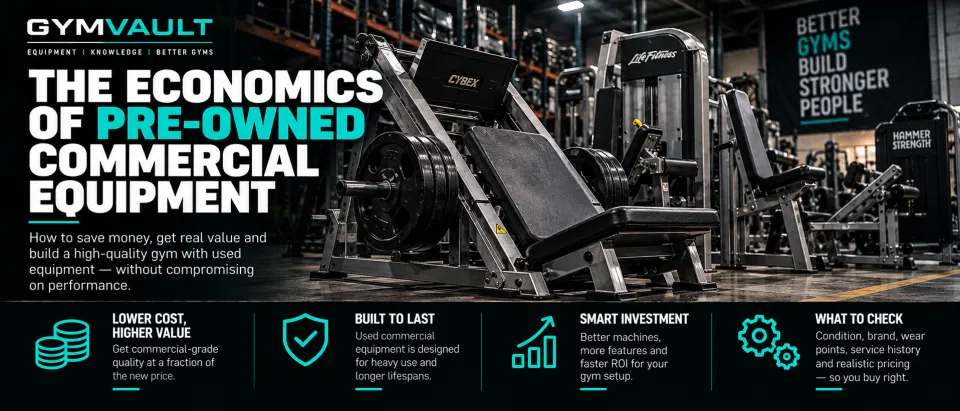
The price on a quotation is only one part of what a machine costs. Delivery, installation, maintenance, downtime and what the machine is worth when…
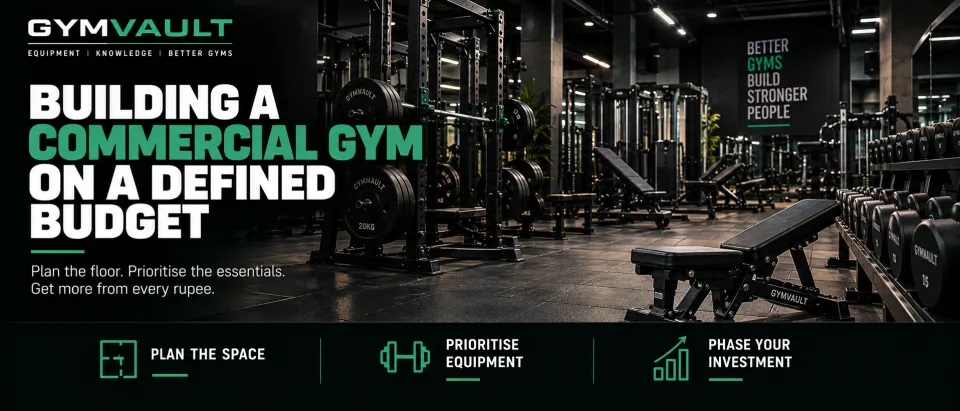
A fixed budget forces good decisions, if you make them in the right order. This is a step-by-step approach to fitting out a gym, hotel fitness room…
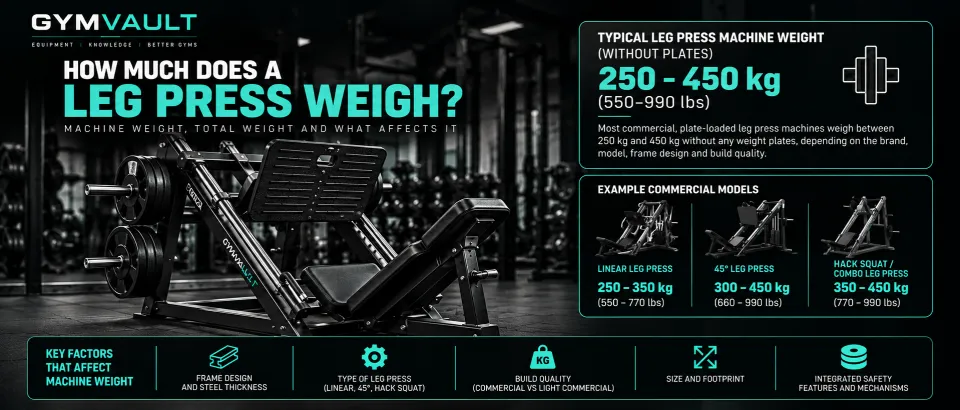
There is no single answer. On the commercial machines in this article, an unloaded plate-loaded leg press starts at anything from about 6 kg to 80…

A complete commercial gym equipment list, organised the way a gym floor is organised, by zone. For each piece of equipment you get its name, what it…

Mike Mentzer died in 2001, but his Heavy Duty system is still argued over in gyms and online. This article sets out who he was, what he actually…
Hypertrophy training means training to build muscle. On most of the questions people argue about, such as how many sets, how many repetitions, how…

Why does 40 kg on one cable machine feel like 20 kg on another? Usually because of the pulley ratio. This guide explains what 1:1, 2:1, 3:1 and 4:1…
In preparation
Our editorial standard
We cite peer-reviewed research where it exists, say plainly when it does not, and treat the methods of famous lifters as history and hypothesis rather than rules. Nothing here is medical advice.

Popular searches